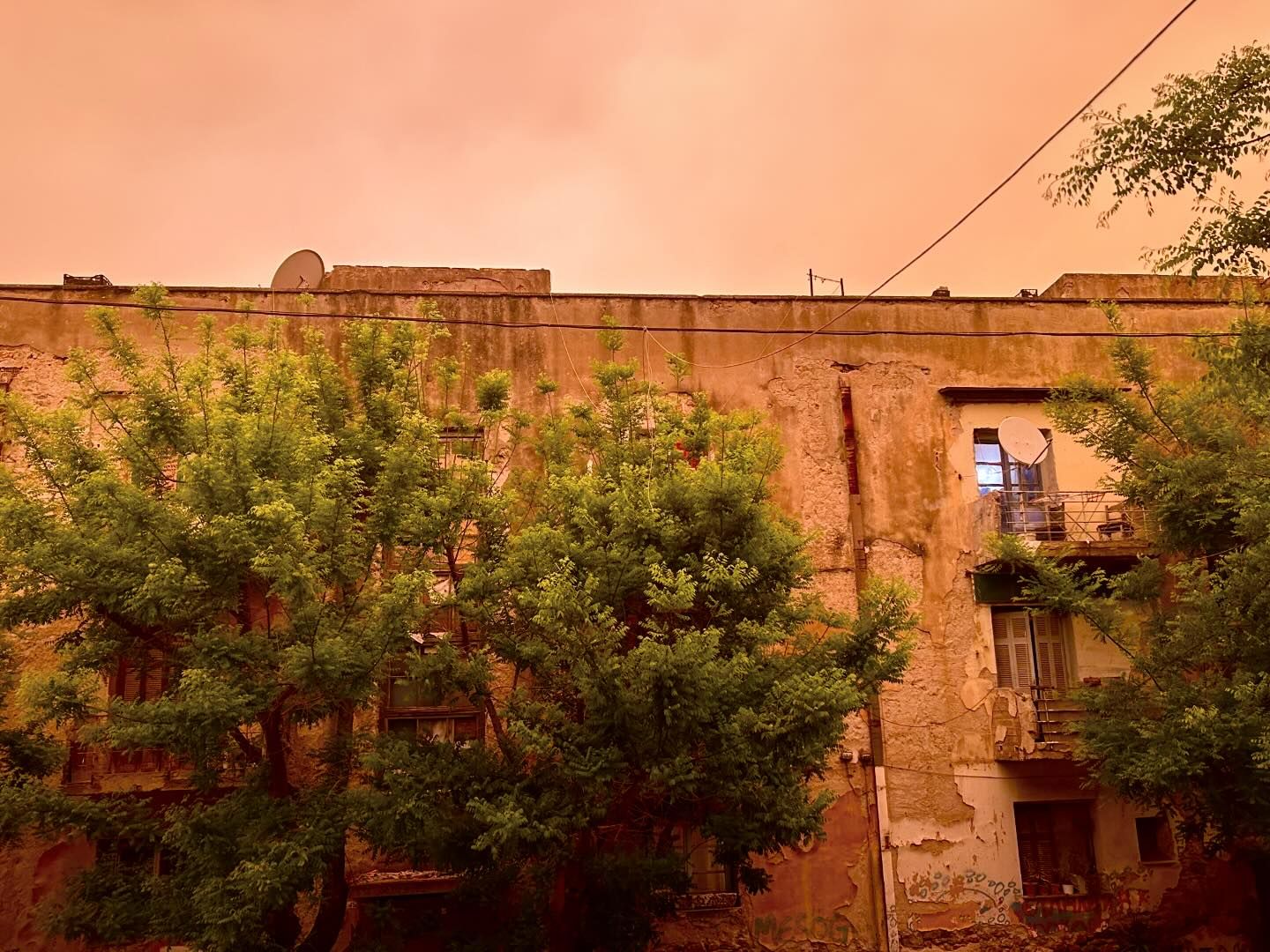
Last news from greek territory struggles

Informations from the perspective of Sy.Ka.Pro

The new season started in low-tension conflictuality with the government despite the fact that during summer huge fires burned one-third of Greek forests. And this destruction clearly occured with the responsibility of the government.

In our squatted community of Prosfygika, on Alexandras Avenue, we run an intense campaign against the repression and gentrification of our neighborhood. We organized several info-events in squares for people to know that the state and the companies want to kick out hundreds of people from the communities houses.
On 5th October, we intervened to the leftist former-government radio station Kokkino and newspaper Avgi with the target to make them publish our statement. We specifically target this party because it is one of the main actor of the gentrification process, pushing the state mechanism to forward its plans.
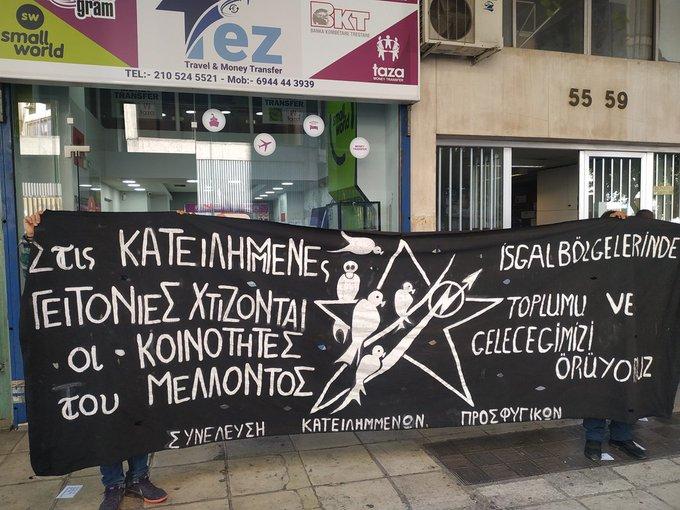
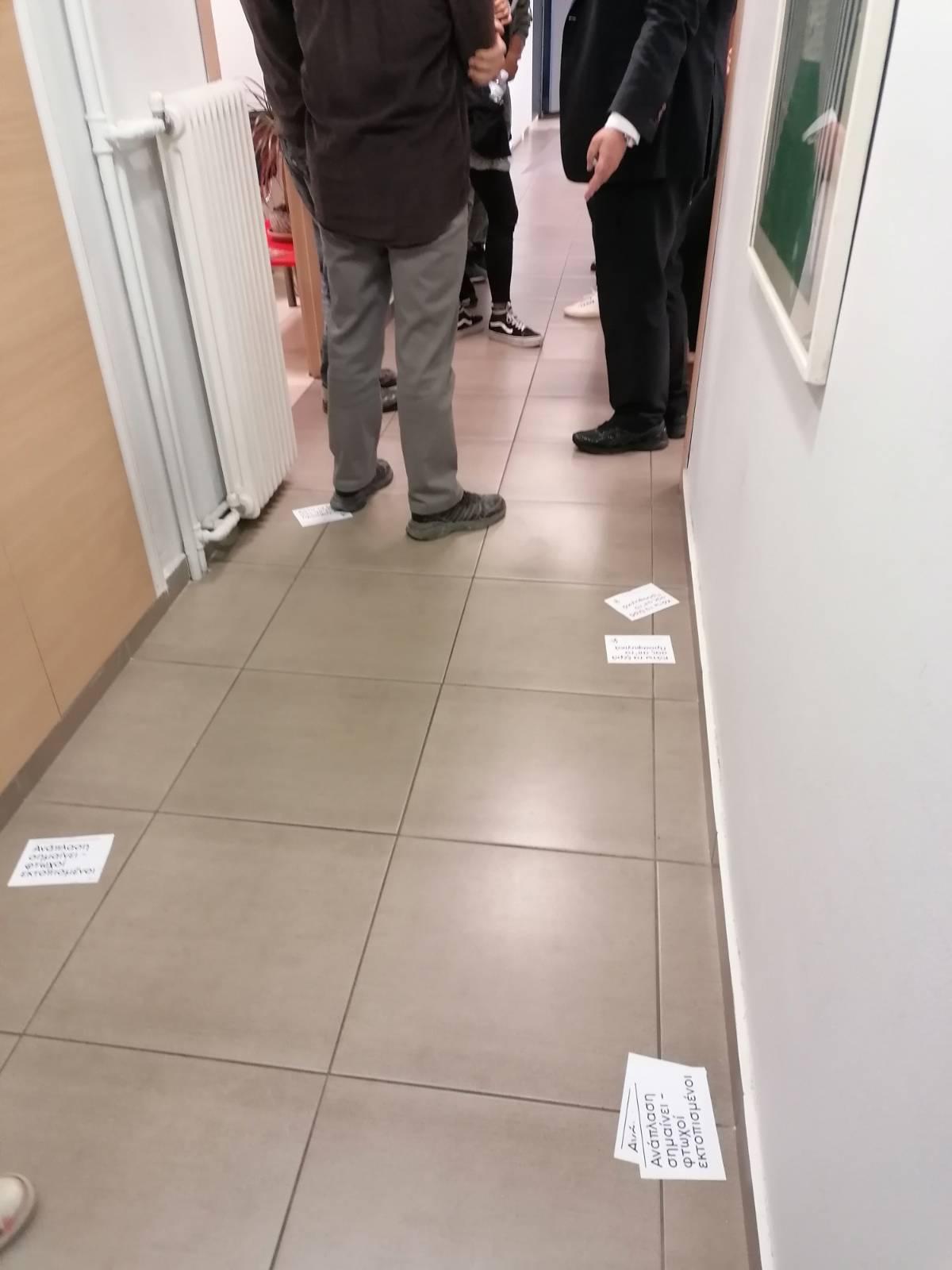
The intervention in Radio Kokkino lasted two hours to make them broadcast our statement on the news.

We also intervened on 14/10 to the main company owning the technical responsibility: Anaplasi ΑΕ (Aνάπλαση Α.Ε.) having as a president the mayor of Athens Kostas Bakogiannis. After our interventions “a crew” of Syriza officials, ex-president of Anaplasi A.E., wanna be athens mayor, and ex regional president came to our neighborhood to make research to prove that the neighborhood needs gentrification.

This first period of campaign ended up October 16. with a demonstration from our neighborhood to the wider area of Ambelokipi. Even though we were not so numerous, we managed to follow a big route in central streets with full guarding equipped with helmets, sticks, gasmasks. Lately, a new law is getting imposed in Greece which is not allowing protestors to take the whole street but confining them to one street-lane or even in some cases to the pavement, surrounded by riot cops pressuring them. So the demonstrations became very tense.

This campaign is a small preview and a warning addressed to the state, of what will happen if they attack to our neighborhood.

At the same time, another anti-repression campaign was going on “against the obligatory DNA capture” also known as the case of the “14” with the general slogan “sabotage the state data”.
Last year, anarchist students were arrested because they occupied a building of the Zografos University to protest against the lockout of Polytechnio. The police stated that they found in the squatted building a beer bottle with a male DNA samples matching another sample gathered after one of the 6 December 2014 the attack of cops. With the excuse of this ridiculous connection, they want to oblige the 14 arrested males comrades of the occupation to give their DNA. Denying it, they are now under the threat of arrestation.
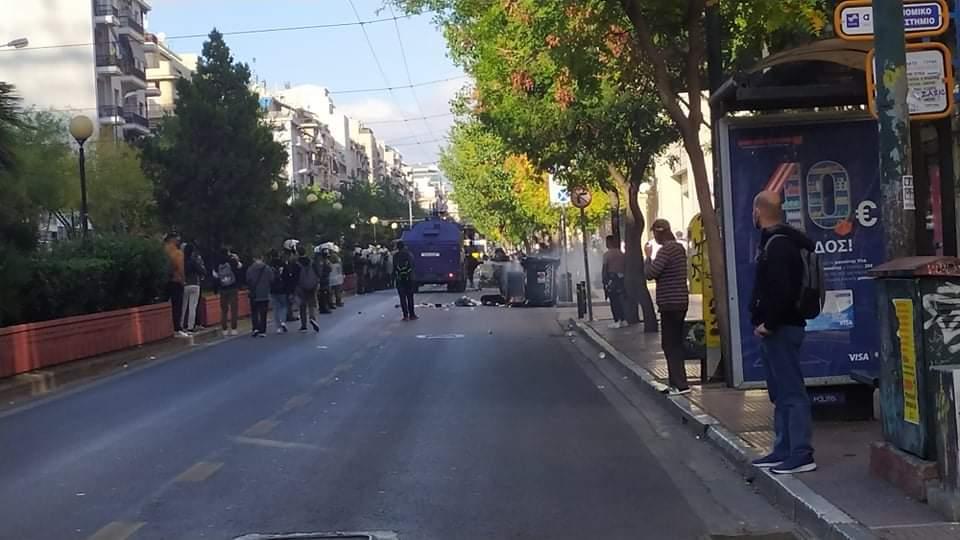
Based on this case, the anarchist movement, and especially the student part of it, launched a campaign with aggressive actions and public informative events. For the end of the campaign, we commonly organized a demonstration that should pass by all the univerisities of the Athens center. However, the demonstration was directly attacked by the riot cops with beatings and tear gas.

Our comrades participating in the guarding try to resist and 6 of them got arrested, including two of our comrades from Sy.Ka.Pro. Right after, the cops got attacked from a building of private education and then they broke the glass-windows of a printing shop injuring the people who were inside.
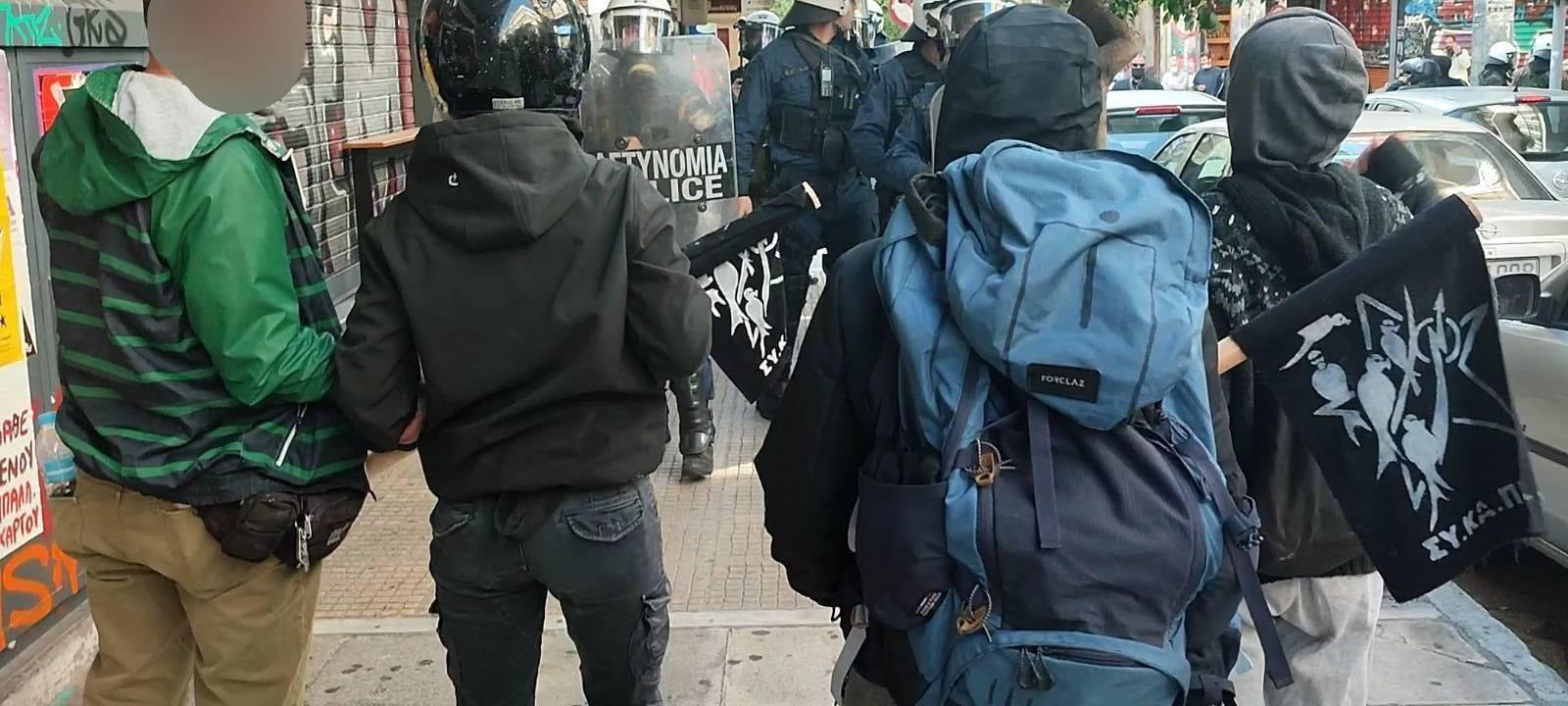
As it seems, 4 of the cops where injured. The main part of the demostration ended in Polytechnic University where people made some fuss, trying to provoke some riots. But this occurred more successfully in the Financial University ASOEE.
Our comrades are still free and the arrested ones got released after a night in detention cells. The campaign for DNA now is going beyond the 14 students because more and more militants are getting arrested with the same fictional cases and excuses. Before the case of 14, it was the case of 8 students of ASOEE.

At the same time, the police murdered an 18 years old person in Perama because he attempted to escape with a stolen car. None of the cops involved in this assassination got convicted with jail sentence or serious charges. The Romani’s community that this person were belonging answered with clashes all around the region of Attica. The anarchist movement also tried to react but the repression was very hard. The only good example of resistance was a fire attack on Zografou police station. For the moment, this state murder did not maintain a central place in the movement’s agenda.

In the same context, the accusation for “possession of molotov” turn into a felony (a high charge) through a new law which was amended. Already two persons went sent to jail after an attack to a police station in the neighborhood closed to the place that the young Roma was murdered.

As the last information, we can report the action days which happened for the anniversary of Polytechnio from 15 to 17 of November, the dates of the antidictatorship insurrection on 1973. A coordination of radical groups, among them students teams as well as our community, decided to occupy a historical building inside Polytecnic university, known as Gini. For the last decade, Gini is the central place for anarchist, antifa and others anticapitalist groups to organize themselves in Athens. Last year, using the excuse of Covid19, the government kickout migrants who were living there on a urgent need. Then, they barricade the building to forbid the access to all the parts of the movement. At the end, the access to the whole Polytechnic University was fordidden as the celebration was cancelled. This present year, we occupied the building of Gini during the three days celebration. We organized two days full of events and we guarded the building and the whole University against the police, being ready for a massive violent conflict in case of invasion.

Upcoming … 6th of December …
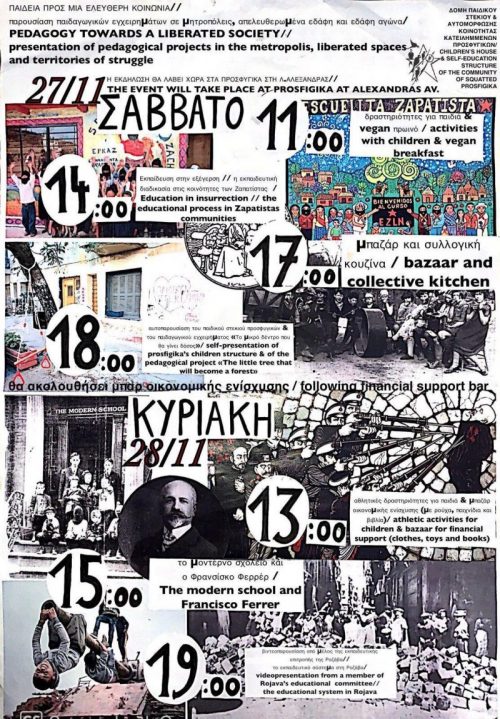
Event 27-28/11: PEDAGOGY TOWARDS A LIBERATED SOCIETY

presentation of pedagogical projects in the metropolis, liberated spaces and territories of struggle

Saturday 27/11

11:00. with children & vegan breakfast

14:00. Education in insurrection // the educational process in Zapatistas communities

17:00. bazaar and collective kitchen

18:00. self-presentation of prosfigika’s children structure & of the pedagogical project «The little tree that will become a forest»

** FOLLOWING FINANCIAL SUPPORT BAR**

Sunday 28/11.

13:00. athletic activities for children & bazaar for financial support (with clothing, toys and books)

15:00. The modern school and Francisco Ferrer

19:00. videopresentation from a member of Rojava’s educational committee// the educational system in Rojava

** THE EVENT WILL TAKE PLACE AT PROSFIGIKA ON AV. ALEXANDRAS**

Anja Flach informiert im Prosfygika über Frauenrevolution

Das Prosfygika ist eine selbstverwaltete Nachbarschaft im Zentrum der griechischen Hauptstadt Athen. Hier fand am Sonntag, 7/11/21, eine gut besuchte Veranstaltung mit der Hamburger Ethnologin und Autorin Anja Flach zur Frauenrevolution in Rojava statt. Bevor Flach die Gäste vorab zur aktuellen Situation in allen Teilen Kurdistans informierte, stellte sich zunächst die griechische Plattform der Kampagne „RiseUp4Rojava“ vor und machte ihre Arbeiten bekannt. Anschließend startete Flach mit der Präsentation des Kurzfilmes „Azadî çi ye?“ ihren Vortrag. Nach den eindrucksvollen Stimmen der Frauen aus Rojava folgte eine kurze Erläuterung über die momentane politische Lage.

„Die Strukturen der kurdischen Bewegung in Bakur (Norden) stehen nach wie vor unter einer groß angelegten Repression mit zehntausenden gefangenen Aktivist:innen und einer Kriminalisierungskampagne gegen die Oppositionspartei HDP. Die Umstände des Widerstands in Rojhilat (Osten) sind nach wie vor unter dem iranischen Gewaltapparat erdrückend. Dennoch beteiligen sich auch dort tausende Menschen am Befreiungskampf. Die Lage in den Medya-Verteidigungsgebieten in Başûr (Süden) spitzt sich seit April des Jahres beträchtlich zu. Das türkische Militär setzt chemische Waffen in der Region ein, wodurch 38 Kämpferinnen und Kämpfer ihr Leben verloren“, erklärte Flach zu Beginn.

Ziel der Angriffe des türkischen Militärs seien vor allem die Strukturen der Frauenbefreiungsbewegung – in allen vier Teilen Kurdistans. Auch in Rojava, dessen Perspektive der Aufbau einer staatenlosen und demokratischen Gesellschaft sei, so Flach. Diese Perspektive habe sich in den letzten Jahren in einigen Strukturen in Rojava realisiert. Das sei jedoch nur aufgrund der über 40-jährigen Existenz der kurdischen Bewegung als Partei und Guerillastruktur möglich gewesen. „Zahlreiche Genoss:innen haben ihr Leben in den Bergen hinter sich gelassen, um ihr Wissen und ihre Erfahrung in den Aufbau von Rojava zu investieren.“ Nach der Analyse von Flach liegt die Grundlage des Genozids am kurdischen Volk in der Ziehung der Nationalgrenzen durch die britischen und französischen Besatzungstruppen 1923.

Einblick in die existierenden Strukturen der Frauenrevolution

Im Anschluss lieferte Flach einen kurzen Einblick in die existierenden Strukturen der Frauenrevolution in Rojava: „Seit 2019 besteht in einigen Gebieten eine autonome Selbstverwaltung mit dem Grundprinzip der Doppelspitze, womit in jeder Struktur eine Frau und ein Mann mit diversen kulturellen Hintergründen als Vertretung stehen. Nicht nur die Selbstverteidigungseinheiten der YPG und YPJ sorgen für Sicherheit; jede Kommune bestehend aus circa 60 Häusern schützt sich mit der kommunalen Selbstverteidigungseinheit HPC. Das Wissen über den Umgang mit der Waffe wird durch Bildungseinheiten der YPJ/HPC an alle Frauen in der Gesellschaft weitergetragen.

Die Selbstverteidigung der Frau findet auch in den Mala Jin statt, Frauenhäuser, welche in jeder Stadt aufgebaut wurden, um Anlaufstelle für Frauen mit diversen Problemen und Anliegen zu sein – häusliche Gewalt, Sorgerechtsstreitigkeiten, Selbstbestimmungskonflikte in Ehe und Familie. Ein Ort der Begegnung, Bildung und Konfliktlösung also. Jinwar als Frauendorf besteht weiterhin in der Perspektive, eine Frauenstadt zu werden. Mit dem Anspruch auf wirtschaftliche Autonomie werden Lebensmittel angebaut, mit regionalen Materialien Häuser gebaut und Bildung für interne und externe Genossinnen angeboten. Der Frauenrat dient als übergeordnete Organisationsstruktur und steht Frauen zur Partizipation offen, wobei auch hier der Anspruch der multikulturellen Zusammensetzung des Rates besteht. Um nicht nur die Frauen in Rojava zu begeistern, sondern auch international die Frauenstimmen zu erheben, wurde JinTV geschaffen. Mit Sitz in Başûr, Rojava und Europa wird momentan zwölf Stunden täglich gestreamt. Das Ziel ist, die Grenzen zu überschreiten und perspektivisch auch auf Englisch zu senden.

Internationalismus war bereits in den 90er Jahren eine Anliegen der kurdischen Bewegung, woraufhin Gruppen aus unterschiedlichen Ländern die Berge Kurdistans besuchten, um in einen Austausch zu treten. Heute wie damals ist es ein Anliegen der kurdischen Bewegung, die internationalen Kräfte zusammenzuführen. Es wird dazu aufgerufen, strategische Netzwerke zu bilden, Kooperativen aufzubauen, Akademien zu gründen und die Hoffnung, welche in der Frauenrevolution liegt in die Welt zu tragen.“

Geschichte von Minawir Xelid

Flach erzählte abschließend die Geschichte von Minawir Xelid vom Dachverband der Frauenbewegung in Nord- und Ostsyrien, Kongreya Star, welche beispielhaft für die Geschichte vieler Frauen der kurdischen Bewegung stehe:

„1990 kamen PKK-Mitglieder nach Rojava. Sie zogen von Haus zu Haus und besuchten die Familien in unserer Gegend, so kamen sie auch in mein Haus. Sie gaben mir das Gefühl, dass es einen neuen Weg geben kann, insbesondere einen neuen Weg für Frauen. Wenn ich die Freiheit der Frauen in der PKK nicht hätte sehen können, wäre ich kein Teil davon geworden. Frauen wurden wertgeschätzt. Wir haben unsere eigenen Strukturen aufgebaut. Ich habe verstanden, dass wenn wir nicht für uns selbst aufstehen werden, wer wird dann für uns aufstehen? Seit 1992 bin ich ein Mitglied der PKK, ich habe mich selbst und viele andere Frauen wachsen sehen.“

Wir müssen zusammenkommen, insbesondere wir Frauen, voneinander lernen und gemeinsam kämpfen, mit diesen Worten schloss Anja Flach ihren Vortrag ab. In den nächsten Tagen wird sie an einer Reise von Lavrio nach Neapel gegen die Isolation von Abdullah Öcalan teilnehmen.

(this article was published first on anfdeutsch.com)